Battery Ready Solar Systems
Solar & Battery Systems
Battery Ready Solar Systems in Cairns
A battery ready solar system is a grid connected solar system built with the components, capacity and physical provisions needed to add a battery later. In practice that usually means a hybrid inverter with spare capacity, an array large enough to charge a battery as well as run the house, space in the switchboard, and cabling already run to where the battery will go.
The idea is simple. The delivery is not. The design, the products and the installation decisions made on day one are what separate a straightforward battery upgrade later from an expensive one. Two systems can both be sold as battery ready and cost thousands of dollars apart when the battery actually goes in.
Replenishable Energy designs, supplies and installs battery ready solar systems across Cairns and Far North Queensland for residential, commercial, rural and light industrial customers.
Do You Actually Need a Battery Ready System?
Not always, and any installer who tells you otherwise is selling rather than advising.
You can add a battery to almost any existing solar system using AC coupling, where the battery has its own inverter and connects on the AC side. Nothing has to be ripped out. The federal government says as much itself: it is often not necessary to remove or replace an existing solar system in order to add a battery, depending on the quality and capability of what is already there.
What a properly designed battery ready system does is make that upgrade cheaper, tidier and less disruptive. What it does not do is unlock something otherwise impossible.
Battery ready makes clear sense when:
- You are installing solar now and you already know a battery is coming within a few years
- Your switchboard needs work anyway, so provisioning for a battery costs very little extra on top
- You want backup power later and need the circuits designed in from the start
- Your roof space is limited and the array has to be sized correctly the first time
Battery ready is the wrong answer when:
- The battery already stacks up for your household today, in which case installing it now captures a larger rebate
- You are being charged a significant premium for the word “ready” without the actual provisions behind it
- The system being quoted is too small to ever charge a battery properly
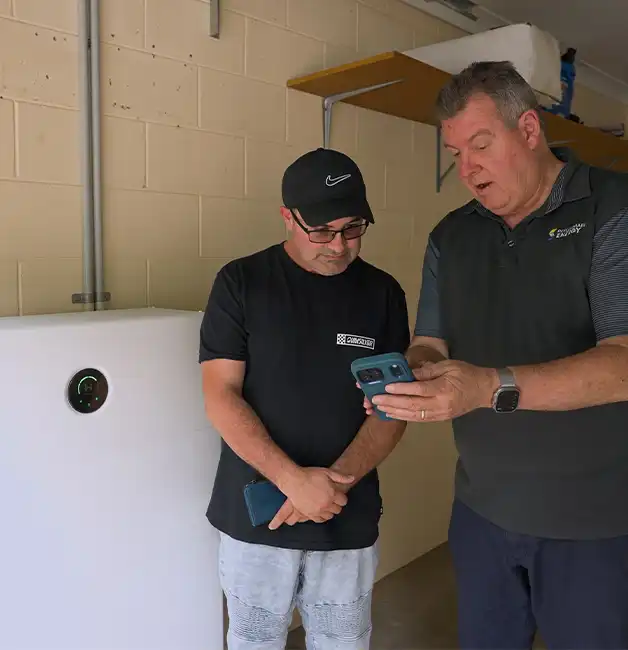
How the Federal Battery Rebate Affects Your Timing
The Cheaper Home Batteries Program takes roughly 30% off the upfront cost of an eligible battery. It is applied as a discount on your quote by an accredited retailer, so there is no form to fill in and no waiting for a payment.
Two rules change how you should think about a battery ready system.
Rule one: you can claim it once per property.
The rebate is limited to one battery installation per property, tied to your electricity meter. If you install a small battery now and claim the rebate, you cannot claim it again when you expand later. That makes getting the first battery the right size much more important than most people realise.
Rule two: the value falls every six months.
The rebate steps down on 1 January and 1 July each year until the program ends in 2030. The next reduction is 1 January 2027. The rate that applies to you is set by your installation date, not your quote date.
Your Four Options, Compared
| Battery ready | Hybrid, no backup | Hybrid with backup | AC coupled retrofit | |
|---|---|---|---|---|
| Battery installed | Not yet | Yes | Yes | Added later to existing solar |
| Inverter | Hybrid, sized with headroom | Hybrid, one unit | Hybrid, one unit | Existing solar inverter plus a separate battery inverter |
| Power in a blackout | No, until the battery goes in | No | Yes, switches over automatically | Depends on the battery, possible with the right unit |
| Upfront cost | Lowest | Middle | Highest | Solar now, battery cost later |
| Cost to add battery later | Low, the groundwork is done | Not applicable | Not applicable | Higher, second inverter required |
| Best for | Battery is 1 to 4 years away | Bill savings, outages not a concern | Wet season outages, medical equipment, working from home | Existing solar owners adding storage |
Every option needs to comply with Ergon’s connection requirements. We handle the application and configure your system accordingly.
How Big Should a Battery Ready System Be in Cairns?
The old advice was a minimum of 5kW. That no longer holds. A 5kW array in Cairns produces roughly 20 kWh on a good day, which a family home will largely consume as it is generated, leaving very little surplus to charge a battery with.
A battery ready system has to do two jobs at once: cover your daytime consumption and produce enough surplus to fill a battery before the sun goes down. That means sizing up.
| Household | Minimum array | Comfortable array | Battery to plan for |
|---|---|---|---|
| 1–2 people, modest air conditioning | 6.6 kW | 8 kW | 5–10 kWh |
| 3–4 people, air conditioning most evenings | 10 kW | 13.2 kW | 10–16 kWh |
| 4+ people, pool, ducted air conditioning | 13.2 kW | 16 kW+ | 16–27 kWh |
| Any household adding an electric vehicle | 15 kW | 20 kW+ | 16 kWh+ |
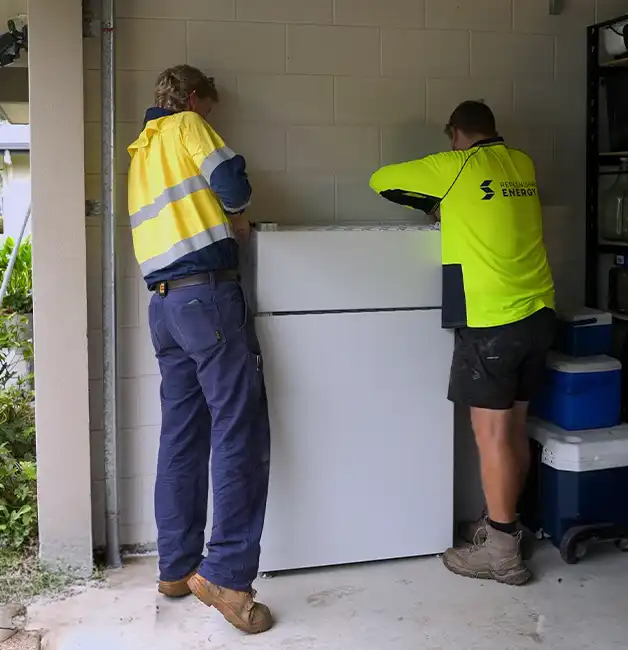
Built for Far North Queensland Conditions
Batteries are less forgiving than panels when it comes to heat and humidity, and where the battery goes is a decision that has to be made before the solar is installed rather than after.
- Temperature limits: Every battery has an operating range and a temperature at which it starts throttling output. A western wall in a Cairns November will find that limit. We choose the location during design.
- Ventilation and clearances: Batteries need airflow and minimum clearances from windows, doors and habitable rooms under Australian standards. Not every wall works.
- Cyclonic wind region: Cairns sits in a cyclonic wind region, so the solar array feeding your battery has to be engineered and certified for it, with correct rail spans and additional roof attachment points.
- Wet season outages: If backup power is the reason you want a battery, the essential loads circuit needs designing in from the start. Retrofitting one means going back into the switchboard.
Frequently Asked Questions
It means a solar system has been designed and installed so a battery can be added later without major rework. In practice that means a hybrid inverter with spare capacity, an array big enough to charge a battery as well as run the house, switchboard space, pre-run cabling and a chosen battery location. There is no legal definition of the term, which is why it is worth asking an installer to confirm each of those items in writing.
You can add a battery to almost any existing solar system using AC coupling, where the battery has its own inverter. A battery ready system makes the upgrade cheaper and tidier, not possible where it otherwise would not be. The exception is very old systems, where the existing inverter may no longer be on the Clean Energy Council approved list, which affects rebate eligibility.
Considerably less than adding one to a system that was not designed for it, because the inverter, cabling and switchboard work are already done. The saving is typically in the labour and the second inverter you no longer need. The battery itself is the same price either way. We can quote both scenarios so you can see the difference.
It depends on your evening consumption and how soon you would add the battery. The federal rebate falls every six months and can only be claimed once per property, so waiting means a smaller discount. Against that, battery prices keep falling. For a household with a heavy evening air conditioning load the numbers usually favour installing now. For a household that is out all day and exports most of what it makes, battery ready is often the smarter play. We model both on your actual bills.
Not strictly, but it is the cleanest approach. A hybrid inverter handles both panels and battery through one unit. Without one you will need a second inverter when the battery goes in. If the battery is several years away, panels now plus an AC coupled battery later can work out similar overall.
Yes. The rebate is claimed when the battery is installed, not when the solar goes in, so a battery ready system does not use up your entitlement. Two things to know: the rebate rate steps down on 1 January and 1 July each year until 2030, so the discount will be smaller than it is today, and it can only be claimed once per property.
Enough to cover your daytime use and still generate surplus to charge the battery. In Cairns that means at least 6.6kW for a small household and 10kW or more for a family home running air conditioning through the wet season. The old five kilowatt guideline is no longer adequate now that export credit has fallen to 6.006c.

How to get a great solar & battery combo - Ebook
No sign-ups, no strings attached. Just click download to get our top 8 tips for a great solar and battery combo. We’re here to help you make the best energy choice, no catches—just good advice.